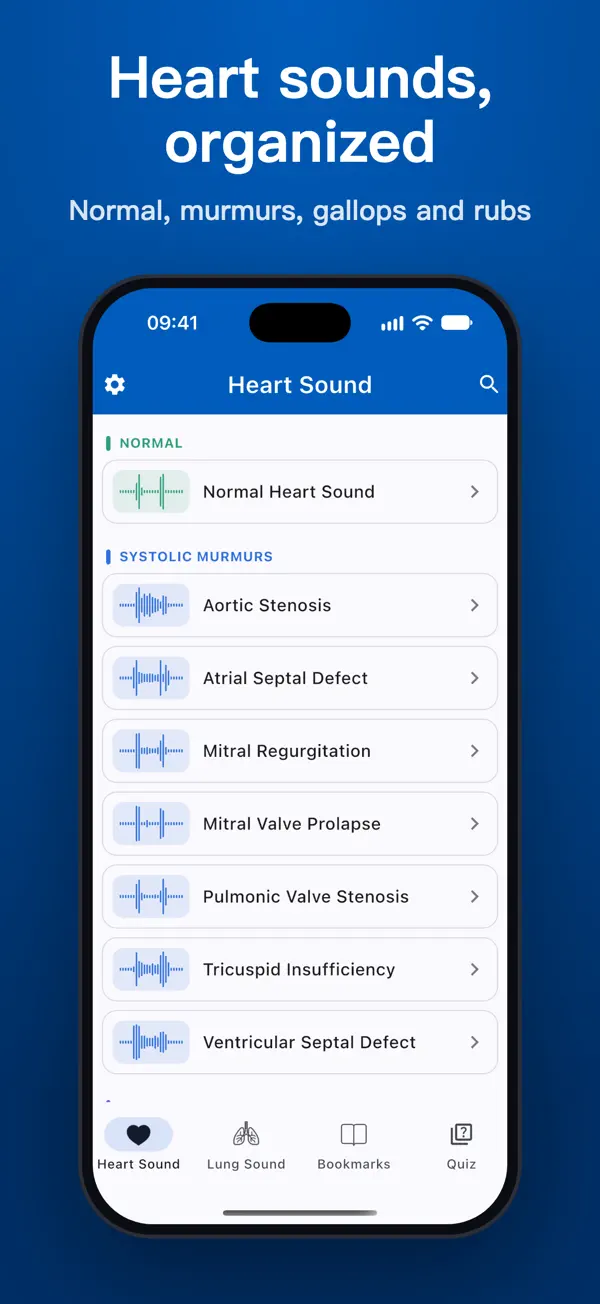
An auscultation trainer with 23 heart sounds and 9 lung sounds. Every sound comes with a live waveform, the exact spot on the chest to listen, and a quick quiz to test yourself.
Who it’s for
Medical, nursing and paramedic students, residents and anyone who wants a sharper ear with the stethoscope. Useful for OSCEs, clinical rotations, and cardiology and respiratory exams.
Screenshots
Features
See every heartbeat
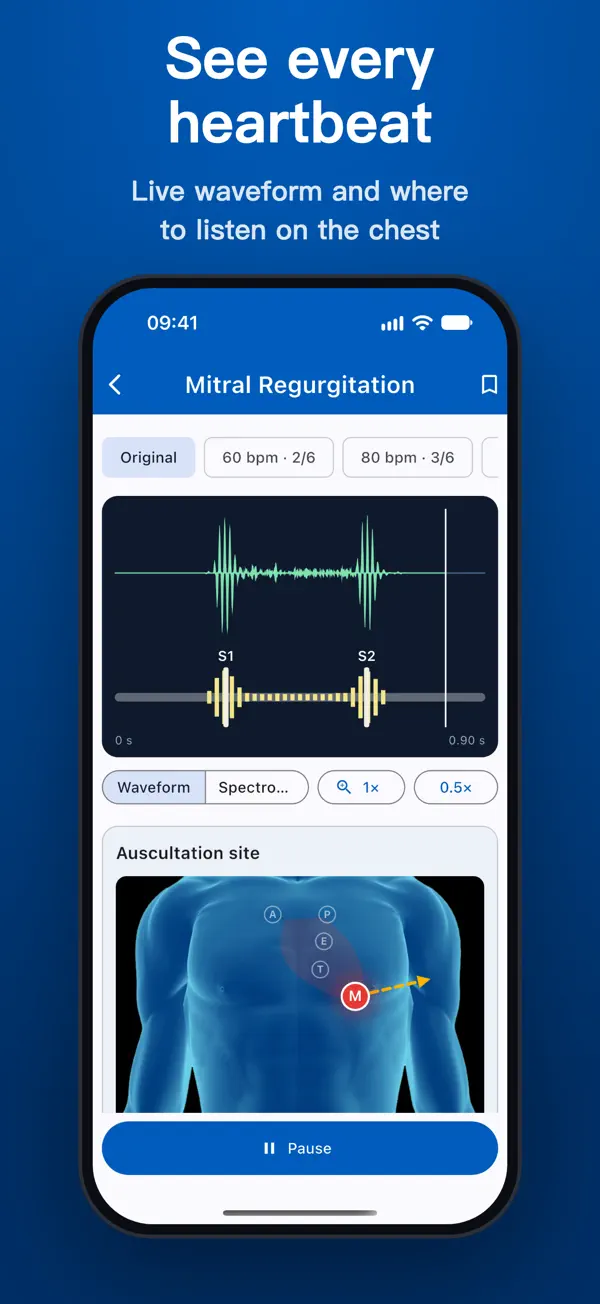
- A live phonocardiogram scrolls as the sound plays, with S1 and S2 marked.
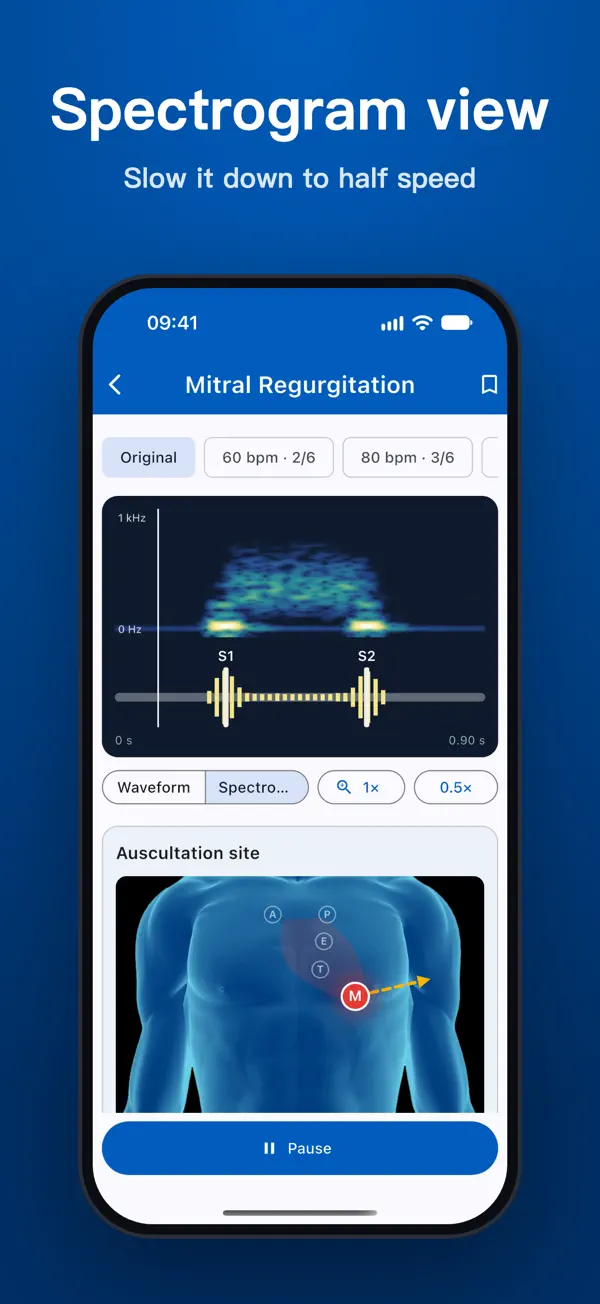
- Switch to the spectrogram view to see the pitch and timing of murmurs and added sounds.
- Slow any sound down to half speed (0.5×) to pick out splits, clicks and soft murmurs.
Know where to listen
- A chest diagram highlights the aortic, pulmonic, Erb’s point, tricuspid and mitral areas, loudest area first.
- Arrows show where each murmur radiates: carotids, axilla, back and more.
- Practical tips for each sound: diaphragm or bell, patient position and how the sound changes with breathing.
23 heart sounds
- Normal heart sound; split S1 and physiological, wide and paradoxical split S2.
- Gallops: S3, S4, summation and quadruple gallop.
- Murmurs: aortic stenosis, aortic insufficiency, mitral stenosis, mitral regurgitation, mitral valve prolapse, pulmonic stenosis, pulmonic insufficiency, tricuspid insufficiency, Austin Flint murmur.
- Congenital: atrial septal defect, ventricular septal defect, patent ductus arteriosus.
- Pericardial: friction rub and pericardial knock.
9 lung sounds
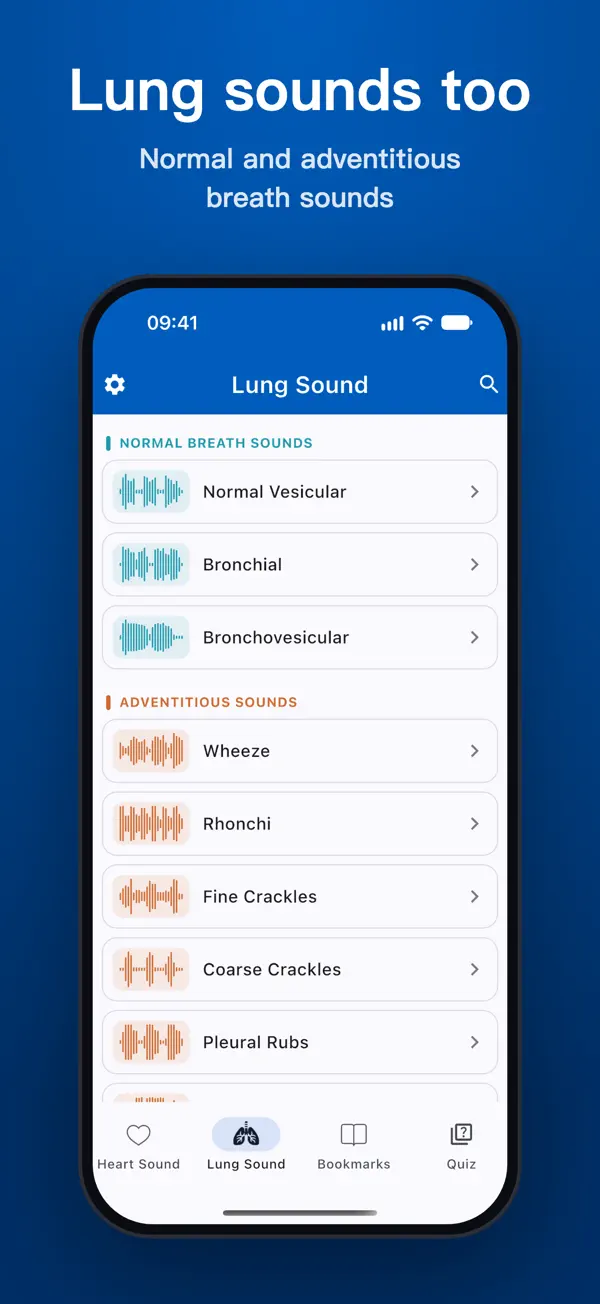
- Normal vesicular, bronchovesicular and bronchial breath sounds.
- Fine crackles, coarse crackles, wheeze, rhonchi, stridor and pleural rub.
Train your ear with the quiz
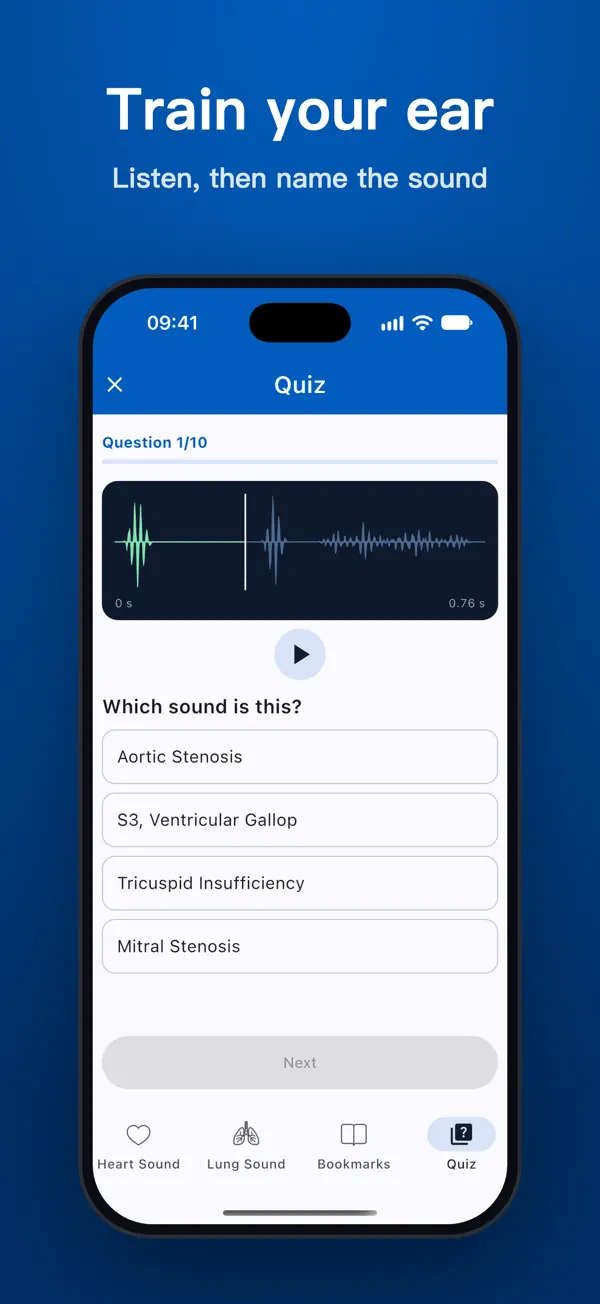
- 10 questions per round: listen to a sound, then choose the right name from 4 options.
- Questions mix heart and lung sounds and use different recordings each time.
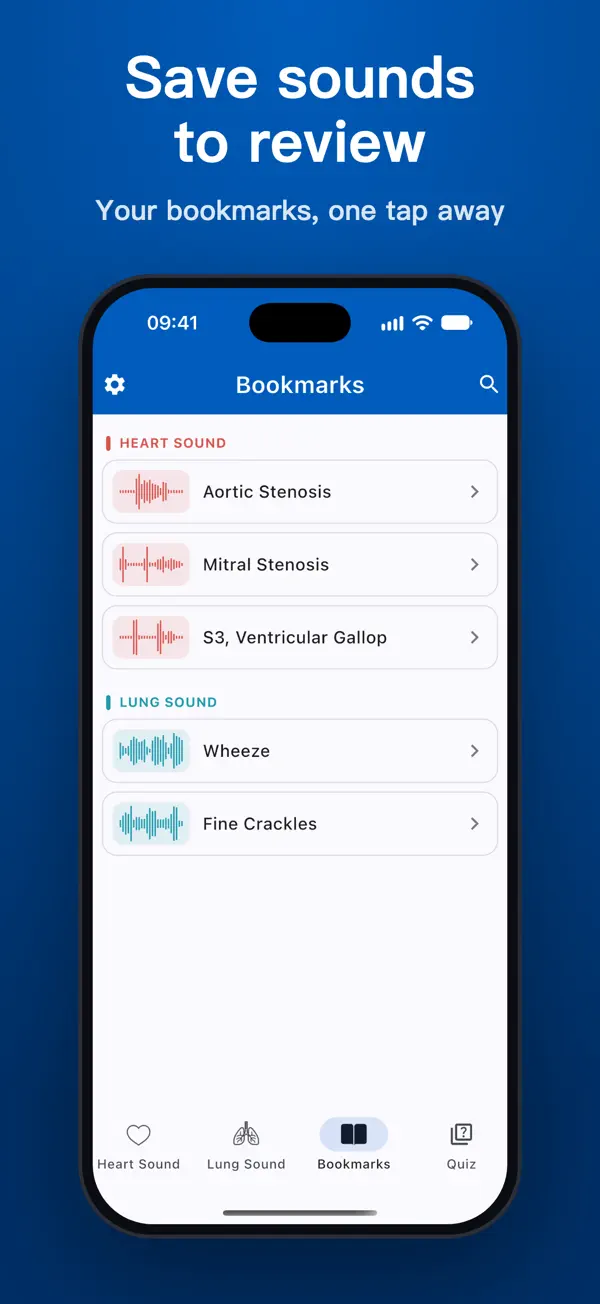
- Bookmark sounds to build your own review list; every sound loops as long as you need.
Frequently asked questions
Which heart and lung sounds are included?
23 heart sounds (normal, splits, gallops, murmurs, congenital and pericardial sounds) and 9 lung sounds (vesicular, bronchovesicular, bronchial, fine and coarse crackles, wheeze, rhonchi, stridor and pleural rub).
Does it work offline?
Yes. All sounds are stored on your device, so you can study anywhere without a connection. There is no account, no sign-up and no ads.
Which languages are supported?
English, Tiếng Việt, Español, 中文, Português (Brasil) and Português (Portugal).
Do I need headphones?
Headphones are recommended. Low-pitched sounds such as S3, S4 and mitral stenosis are hard to hear on phone speakers.
Important: Lung Heart Sounds is for educational purposes only. It is not a medical device and must not be used to diagnose or treat any condition.
Download Lung Heart Sounds
Learn to recognize heart and lung sounds by ear.


Questions or ideas? contact@windyhealth.com · Privacy policy