Listening to a child’s chest is not the same as listening to an adult’s. Small children breathe fast, cry, move and make noises from the nose and throat, and the history often comes from a parent who says the child is “wheezy”. Research on children’s breath sounds shows what that word really means to parents, how well listeners agree on recordings from young children, and how much the stethoscope adds when pneumonia is suspected. Numbers in brackets refer to the references at the end.
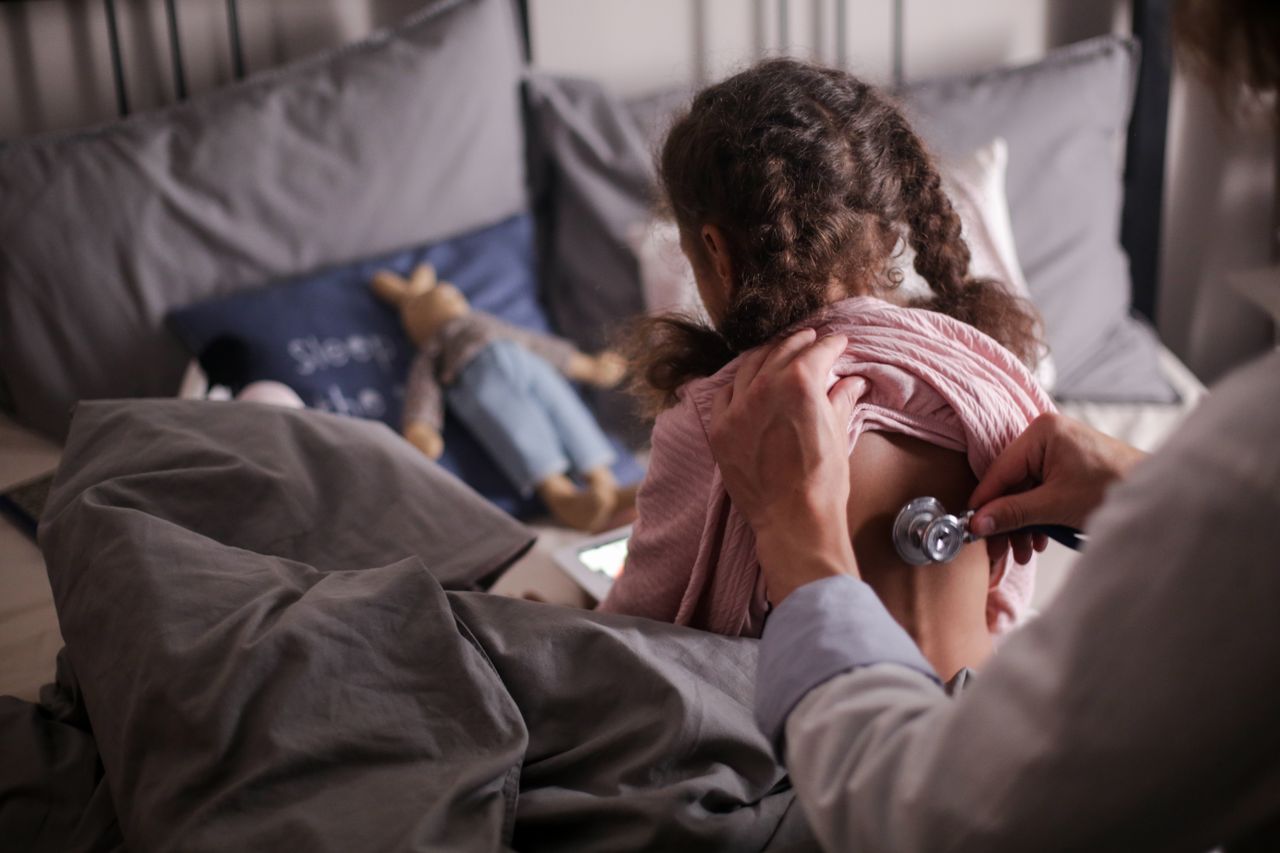
Photo: cottonbro studio, via Pexels.
What do parents mean by “wheeze”?
Reported wheeze is the cornerstone of asthma diagnosis, so Cane and colleagues asked what parents actually understand by the word [1]:
- In a questionnaire for 160 parents of clinic attendees with reported wheeze, “sound” and “difficulty in breathing” were perceived as central to “wheeze”. Yet 23% did not select “what you hear”.
- “Whistling” was mentioned by only 11% of parents, although it featured in 11 of 12 epidemiology questionnaires.
- In a second study of 139 parents, there was less than 50% agreement between parents’ and clinicians’ reports of wheeze and asthma.
Elphick and colleagues interviewed the parents of 92 infants with noisy breathing, starting with an open question and ending with a choice between wheeze, ruttle and stridor, shown by imitation and video clips [2]. Wheeze was the most commonly chosen word on initial questioning (59%), but only 36% were still using it at the end of the interview, while the use of the word “ruttles” doubled. The authors warned that this imprecise use of “wheeze” may be leading to overdiagnosis [2].
Saglani and colleagues tested a video questionnaire in 43 children (median age 17 months) who had bronchoscopy for troublesome noisy breathing [3]. Parents watched four clips (wheeze, stridor and two other upper respiratory noises) and chose the one that resembled their child’s main symptom:
- Of the 19 children with doctor-observed wheeze, 9 parents chose wheeze alone on the video, and all 9 children had a normal upper airway.
- Parents of 9 children with doctor-observed wheeze chose a noise other than wheeze as an equal or only symptom, and 5 of these children had upper airway abnormalities.
- Of the 11 children with wheeze reported only by parents, 2 parents chose wheeze alone, and both children had normal bronchoscopic findings. Five of the remaining 9 children had upper airway abnormalities.
What this means: “my child is wheezy” is a starting point, not a finding. The noise a parent hears may come from the upper airway rather than the chest, and the stethoscope, together with a careful description of the sound, helps tell them apart.
Recorded lung sounds in young children: how well do listeners agree?
The Pneumonia Etiology Research for Child Health (PERCH) study recorded lung sounds with a digital stethoscope in children aged 1 to 59 months at six sites in Africa and Asia [4]. Cases had WHO severe or very severe pneumonia, and controls from the community did not. A listening panel classified each recording as normal, crackle, wheeze, crackle and wheeze, or uninterpretable:
- Primary listeners considered 89.5% of 792 case recordings and 92.4% of 301 control recordings interpretable.
- They agreed on the presence or absence of any abnormality in 74.9% of cases and 69.8% of controls, on crackles in 70.6% and 82.4%, and on wheeze in 72.6% and 73.8%.
- Crying, tachypnoea, upper airway noises, more than 3 uninterpretable chest positions, being a control and the study site predicted disagreement between listeners.
- Among interpretable examinations, 38.0% of cases and 84.9% of controls were normal.
The authors concluded that their method was feasible and likely valid, that small airway inflammation is common in WHO pneumonia, and that digital auscultation may become an important pneumonia diagnostic in developing countries [4].
What this means: even trained listeners often disagree on recordings from young children, and the main obstacles are a crying, fast-breathing child and noise from the upper airway.
Can the stethoscope diagnose pneumonia in children?
A JAMA Rational Clinical Examination review by Shah and colleagues pooled 23 prospective cohort studies of 13 833 children with possible pneumonia, using an infiltrate on chest radiograph as the reference standard [5]. The prevalence of radiographic pneumonia was 19% in North American studies and 37% outside North America.
| Finding | Likelihood ratio | Sensitivity / specificity |
|---|---|---|
| Fever (temperature >37.5°C) | 1.7–1.8 | 80%–92% / 47%–54% |
| Tachypnoea (respiratory rate >40 breaths/min) | 1.5 | 79% / 51% |
| Moderate hypoxaemia (oxygen saturation ≤96%) | 2.8 | 64% / 77% |
| Increased work of breathing (grunting, flaring, retractions) | 2.1 (positive) | |
| Normal oxygenation (oxygen saturation >96%) | 0.47 |
No single symptom was strongly associated with pneumonia, and auscultatory findings were not associated with the diagnosis. The authors concluded that hypoxia and increased work of breathing are more important than tachypnoea and auscultatory findings [5].
What this means: in a coughing child, look at the work of breathing and check the oxygen saturation before relying on what you hear.
Does a wheeze change the picture?
A later PERCH analysis asked whether digitally recorded lung sounds were associated with radiographic pneumonia or death in children aged 1 to 59 months hospitalized with pneumonia at eight sites in six countries [6]:
- Among children without WHO danger signs, wheezing without crackles was associated with lower odds of radiographic pneumonia than a normal recording (adjusted odds ratio 0.35).
- Crackles only (no wheeze) and any wheeze (with or without crackles) were not significantly associated with radiographic pneumonia (adjusted odds ratios 2.13 and 0.63).
- Among children with WHO danger signs, no lung sound classification was independently associated with radiographic pneumonia.
- Among children without danger signs, those with recorded wheezing had a lower case fatality than those without wheezing (3.8% vs 9.1%).
The authors noted that further research is needed, but that with further development digital auscultation may eventually contribute to child pneumonia care [6].
What this means: in a lower-risk child, a wheeze without crackles points away from radiographic pneumonia. It is one clue among several, not a rule.
Heart murmurs in children are a separate question, covered in our article on heart murmurs and gallops.
Lessons for listening to children’s chests
- Ask what “wheeze” means. Have parents describe or imitate the noise, or show them examples, because their word often differs from yours [1][2][3].
- Think of the upper airway. Noisy breathing that parents call wheeze can come from above the chest [3]. Know what wheeze, stridor and rhonchi each sound like so you can tell them apart.
- Listen to a calm child. Crying, fast breathing and upper airway noises were the main reasons listeners disagreed [4].
- Use the stethoscope with the oxygen saturation. For pneumonia, hypoxaemia and increased work of breathing told more than auscultation [5].
- Pay attention to wheeze. In children without danger signs, wheezing without crackles made radiographic pneumonia less likely [6].
Practice with Lung Heart Sounds
Lung Heart Sounds is an auscultation trainer with 23 heart sounds and 9 lung sounds. Knowing exactly what a wheeze, a rhonchus and stridor sound like makes it easier to judge what a parent describes and what you hear in a busy clinic.
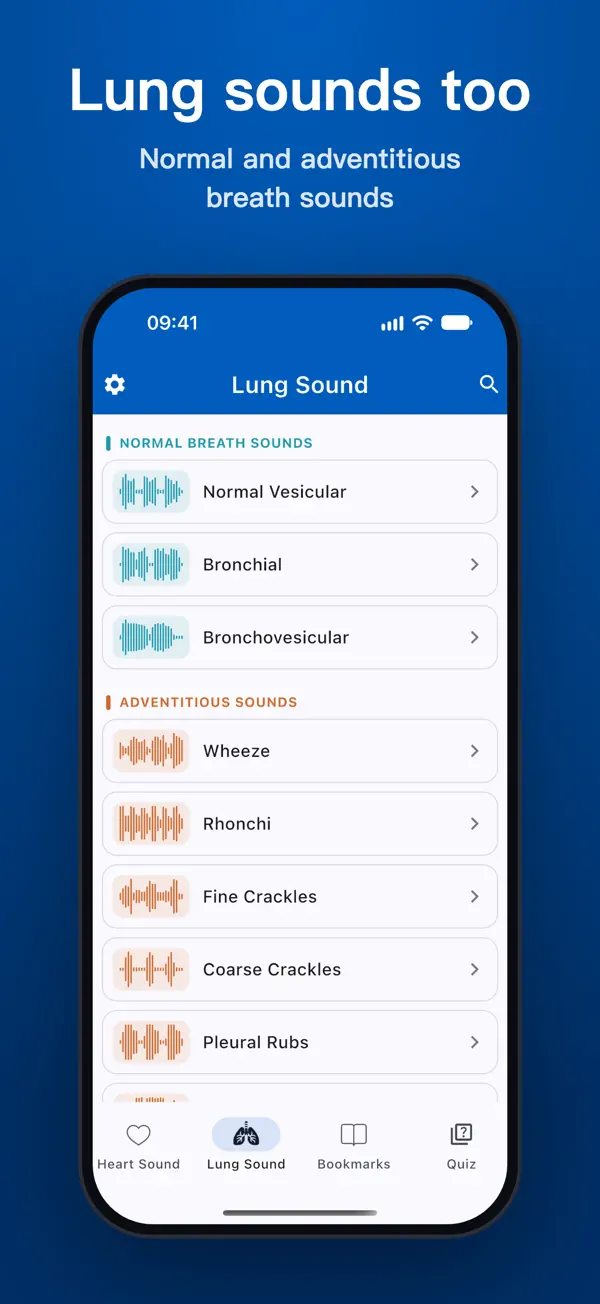
- 9 lung sounds: normal vesicular, bronchovesicular and bronchial breath sounds, plus fine crackles, coarse crackles, wheeze, rhonchi, stridor and pleural rub.
- See what you hear: a live waveform and a spectrogram view, and half-speed (0.5×) playback for any sound.
- Practical tips for each sound: diaphragm or bell, patient position and how the sound changes with breathing.
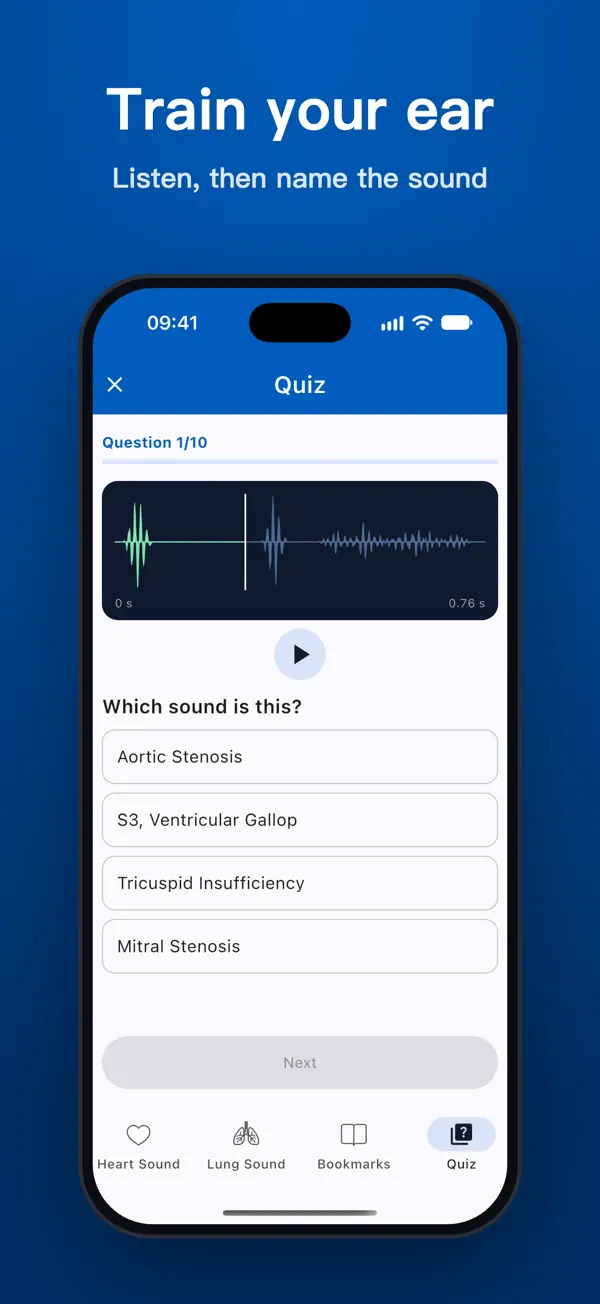
- Test yourself: 10 questions per round: listen to a sound, then choose the right name from 4 options. Questions use different recordings each time.
- Works offline, with no account and no ads. Headphones are recommended.
Download on iOS: Lung Heart Sounds on the App Store
Download on Android: Lung Heart Sounds on Google Play
Read more: what research says about crackles, wheezes and rhonchi and what research says about diminished breath sounds.
Disclaimer: this article is for educational purposes only and is not a substitute for formal clinical training or professional medical advice. The studies cited did not evaluate Lung Heart Sounds. The app is not a medical device and must not be used to diagnose or treat any condition.
References
- Cane RS, Ranganathan SC, McKenzie SA. What do parents of wheezy children understand by “wheeze”? Arch Dis Child. 2000;82(4):327–332. doi:10.1136/adc.82.4.327. https://pmc.ncbi.nlm.nih.gov/articles/PMC1718271/
- Elphick HE, Sherlock P, Foxall G, et al. Survey of respiratory sounds in infants. Arch Dis Child. 2001;84(1):35–39. doi:10.1136/adc.84.1.35. https://pmc.ncbi.nlm.nih.gov/articles/PMC1718612/
- Saglani S, McKenzie SA, Bush A, Payne DN. A video questionnaire identifies upper airway abnormalities in preschool children with reported wheeze. Arch Dis Child. 2005;90(9):961–964. doi:10.1136/adc.2004.071134. https://pmc.ncbi.nlm.nih.gov/articles/PMC1720594/
- McCollum ED, Park DE, Watson NL, et al. Listening panel agreement and characteristics of lung sounds digitally recorded from children aged 1–59 months enrolled in the Pneumonia Etiology Research for Child Health (PERCH) case-control study. BMJ Open Respir Res. 2017;4(1):e000193. doi:10.1136/bmjresp-2017-000193. https://pmc.ncbi.nlm.nih.gov/articles/PMC5531306/
- Shah SN, Bachur RG, Simel DL, Neuman MI. Does this child have pneumonia? The Rational Clinical Examination systematic review. JAMA. 2017;318(5):462–471. doi:10.1001/jama.2017.9039. PMID 28763554
- McCollum ED, Park DE, Watson NL, et al. Digital auscultation in PERCH: associations with chest radiography and pneumonia mortality in children. Pediatr Pulmonol. 2020;55(11):3197–3208. doi:10.1002/ppul.25046. https://pmc.ncbi.nlm.nih.gov/articles/PMC7692889/